 Zach Holloway
Blueprinting a Medicare patient experience for a medical device manufacturer
How a patient goes from a doctor's referral to a device at home depends on sales, care navigation, billing, fulfillment and payer rules, across a dozen systems. I designed and ran the working sessions that put that whole path on one blueprint, then used it to decide what to fix first.
The blueprint turned nine touchpoint concepts into a scored, sequenced 2026–2028 roadmap. Five are moving forward, and the first two pilots, patient onboarding and the affordability conversation, are set up to test before anything is built.
Level 3 operational flows
Impact/effort prioritization
Business cases + pilot cards
2026–2028 roadmap
Patients were dropping out between referral and delivery, and it was hard to say where. Every team owned a piece of the Medicare order journey, but no single picture showed the whole thing.
The client already had a future-state vision and a hypothesized patient journey. What it needed was the people, process and technology underneath each moment, so it could tell which improvements were worth funding and in what order.
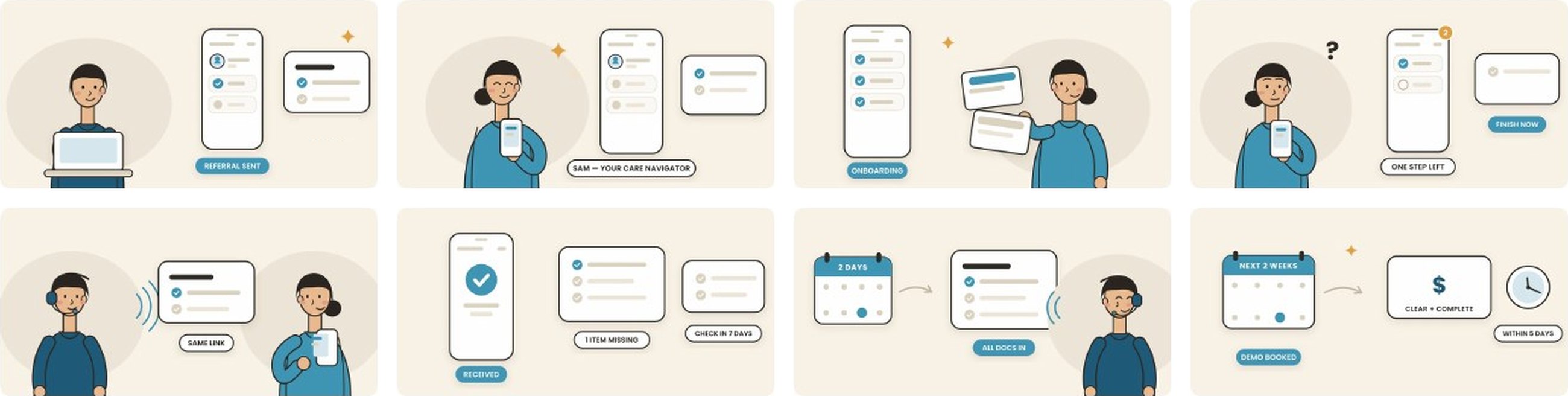
Before anyone drew a swimlane, the group reviewed an illustrated patient narrative. It covered nine concepts in the order a patient lives them, across four phases: referral and onboarding, demo and acceptance, delivery, and training and support. Exceptions such as "not ready yet" and a skilled-nursing stay were part of the story, not footnotes. The blueprint's job was to design the backstage to keep the narrative's promises.
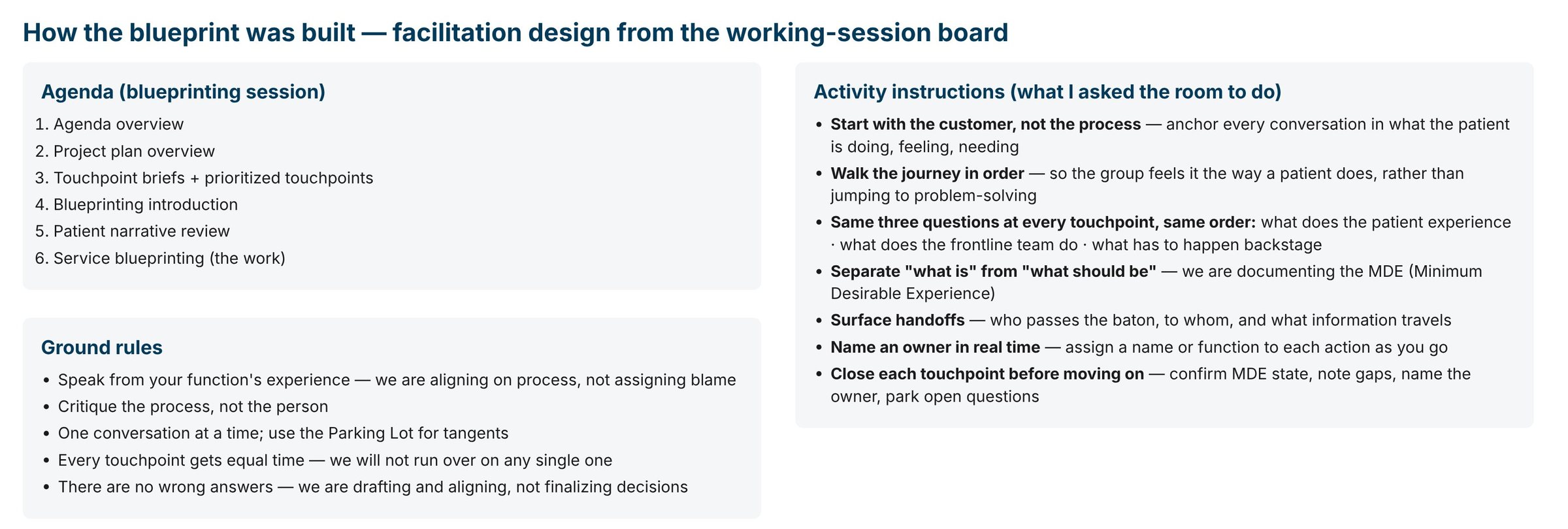
I designed and facilitated the blueprinting working sessions with a nine-person core team from across the business. Each Level 2 area was then validated with the people who run it. Cross-functional mapping only works if people feel safe describing how their part really runs, so I built the sessions around a fixed protocol:
One journey, three altitudes
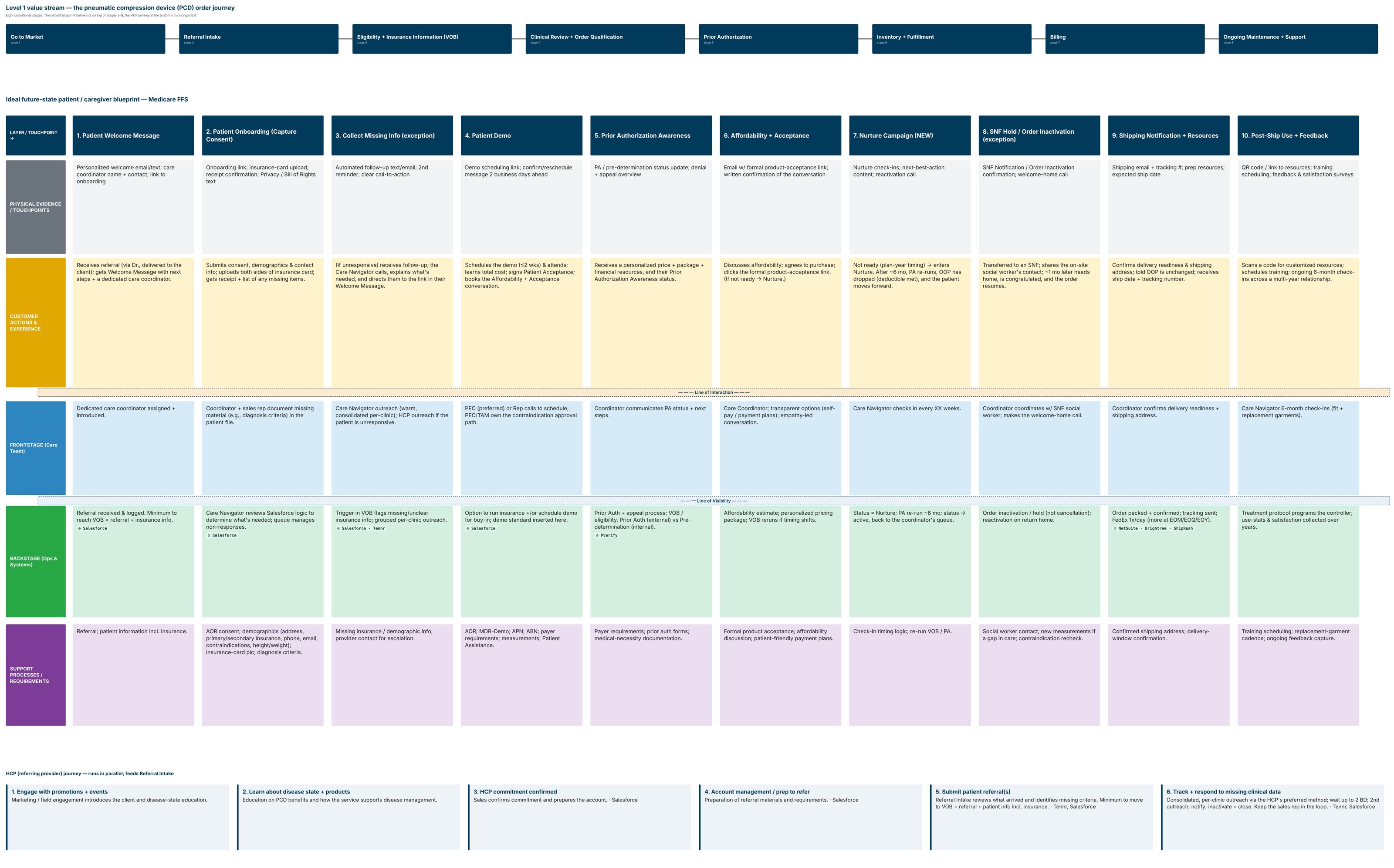
At the top is an eight-stage value stream, from go-to-market through ongoing support. Beneath it, I built the future-state patient and caregiver blueprint in Miro. Ten touchpoints run across physical evidence, customer actions, frontstage, backstage and support processes, separated by lines of interaction and visibility. The referring provider's journey runs alongside, because that's where the referral starts. Exceptions got their own full columns: collecting missing information, a nurture path for patients who aren't ready, and a skilled-nursing hold. Mapping those paths is what forced the group to agree on timing and on who makes the call.
Level 3 flows where the detail mattered
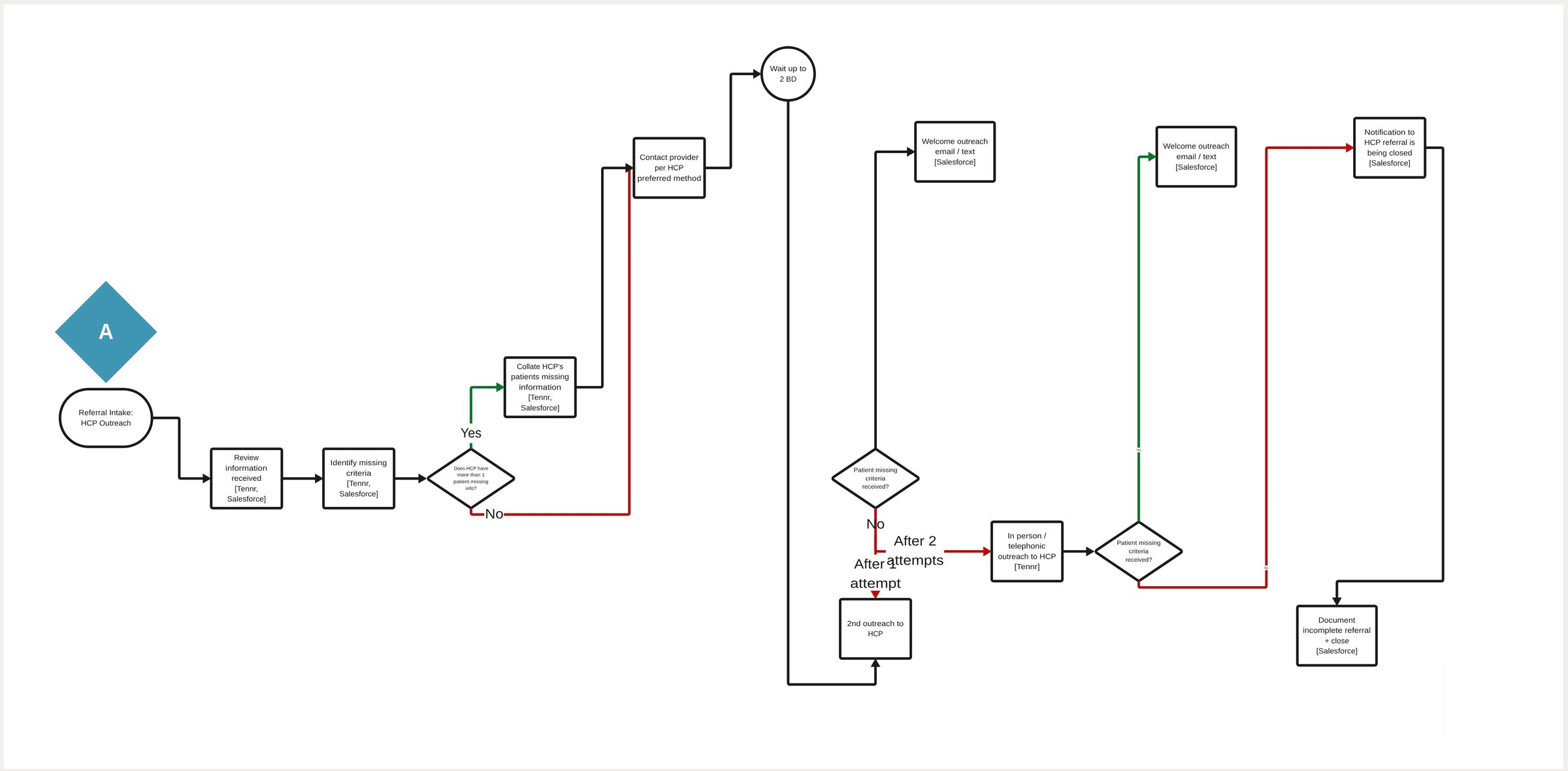
Detail was controlled by level. The blueprint stays at Level 1 and 2, and six operational areas drop to Level 3 flows only where a decision depended on it: referral intake, patient onboarding, insurance verification, demo scheduling, affordability and prior authorization. The referral-intake flow below spells out what used to be tribal knowledge: one outreach per clinic rather than per patient, how long to wait, when to escalate, and the two ways a referral can close.
Prioritization the room owned
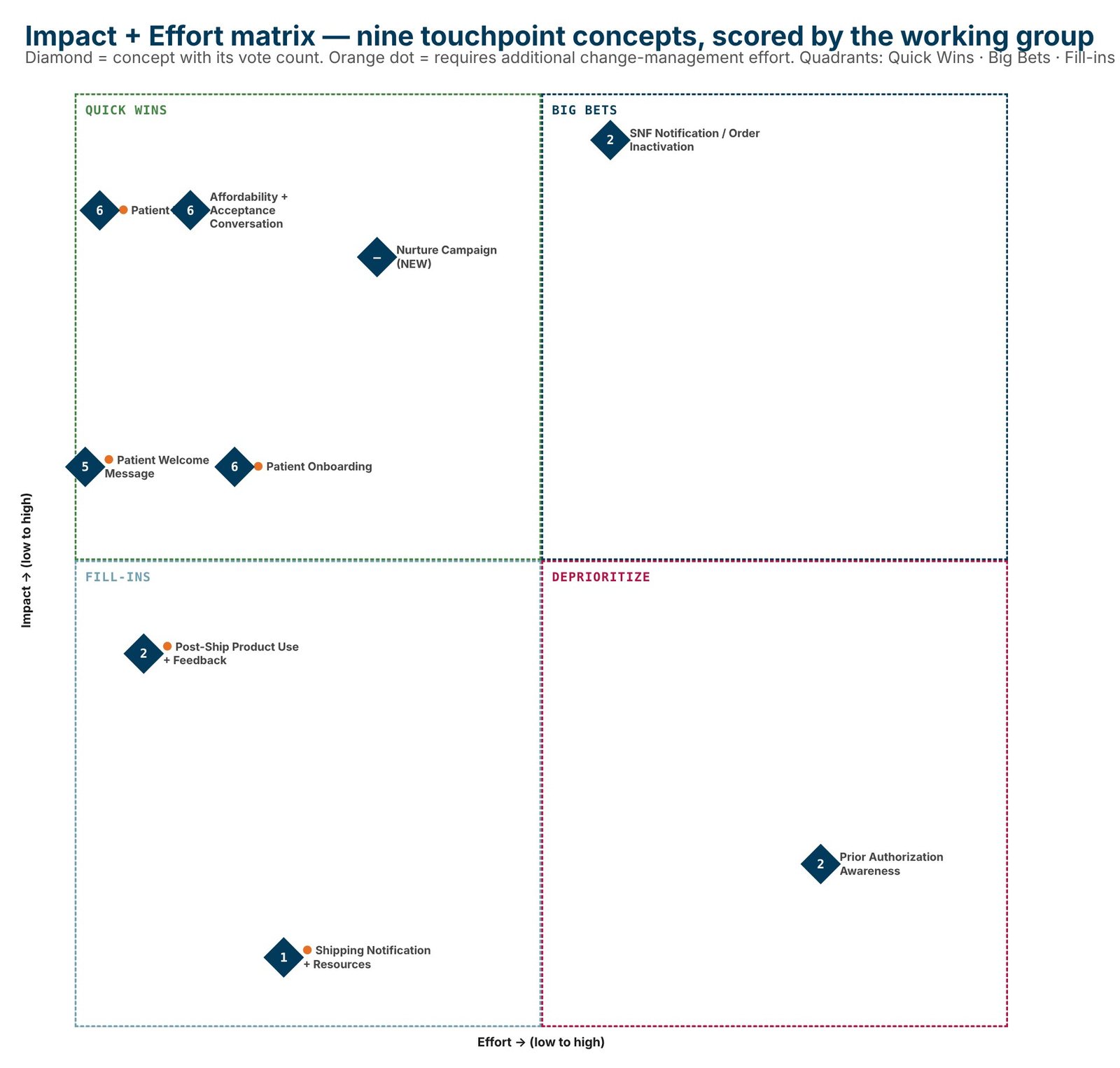
I set up the impact/effort frame and the scoring rules. The working group did the scoring and voting, and each rating came with a "why we believe this" line so it could be challenged later. Change-management effort was flagged on its own because it kept turning out to be the real cost. The ninth concept, a nurture path for patients who aren't ready yet, came out of the blueprinting itself and moved forward with the top four.

A sequenced roadmap, not a backlog
Five concepts move forward in the first phase: welcome, onboarding, demo, affordability, then nurture. The other four are sequenced behind a gate rather than dropped. The order follows dependencies, not just scores.
Learn before building
Two pilots, onboarding and the affordability conversation, test a care-navigator call plus digital communications. They're measured on cycle time and yield, and the results feed both the service design and the technology investment.
One picture of the order journey
Sales, care navigation, billing, fulfillment and operations now share a single map of how a patient gets from referral to device, with owners, systems and cycle times on it.